Rick Russell Addresses the Micro Nano Technology Special Interest Group at the University of Utah

Merit Sensor’s president, Rick Russell, spoke recently as the keynote speaker for the Micro Nano Technology (MNT) Special Interest Group to a group of approximately 80 U.S. college educators gathered at the University of Utah. The event is “a venue to share ideas and learn from others who work to educate technicians, a place to stay on the forefront of industry and workforce needs, and a forum to network and share ideas on ways to strengthen and augment workforce development programs through educational partnerships with industry for tomorrow’s micro and nano technology workforce” (MNT 2017 Special Interest Group Program).
Rick Russell, Micro Nano Technology

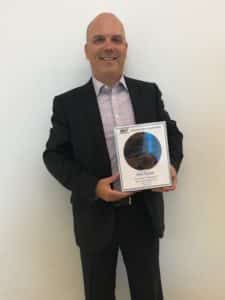
Rick Russell, President of Merit Sensor, was presented with a 6-inch wafer as a token of appreciation for addressing the Micro Nano Technology Special Interest Group at the University of Utah on July 18, 2017.

With over 20 years of experience working with MEMS (microelectromechanical systems), Rick has valuable industry insight to offer educators and their students. In his speech he emphasized the importance of teachers stimulating students’ interest in science and experimentation and the importance of pulling some of the less-than-stellar students out of their shells because, he argued, they are sometimes the most valuable employees in the workplace. “I can’t say enough,” he said, “about getting the kids involved.” Organizations like the Micro Nano Technology (MNT) Special Interest Group are important to companies, like Merit Sensor, that value the way students are educated and encouraged. Some of the students could end up working in the field of MEMS pressure sensors and even for Merit Sensor.

The workforce at Merit Sensor by in large comprises electrical, mechanical, and chemical engineers; technicians; and operators. The company is highly dependent on technical knowledge and skills and, therefore, looks to today’s students to bring fresh knowledge and enthusiasm to help it stay at the forefront of the industry in the face of tomorrow’s challenges.
Congratulations to the winner of the Apple Watch drawing!

We want to send a big thank you to everyone who came by our booth at Sensors Expo and participated in our crossword puzzle contest. A special congratulations to Juergen Zach, of Pentair, who won the drawing for the Apple Watch prize.  We had a tremendous turnout with a lot of entries. All the entries […]

Something Fishy – TR Series Demo

Something Fishy – TR Series Demo

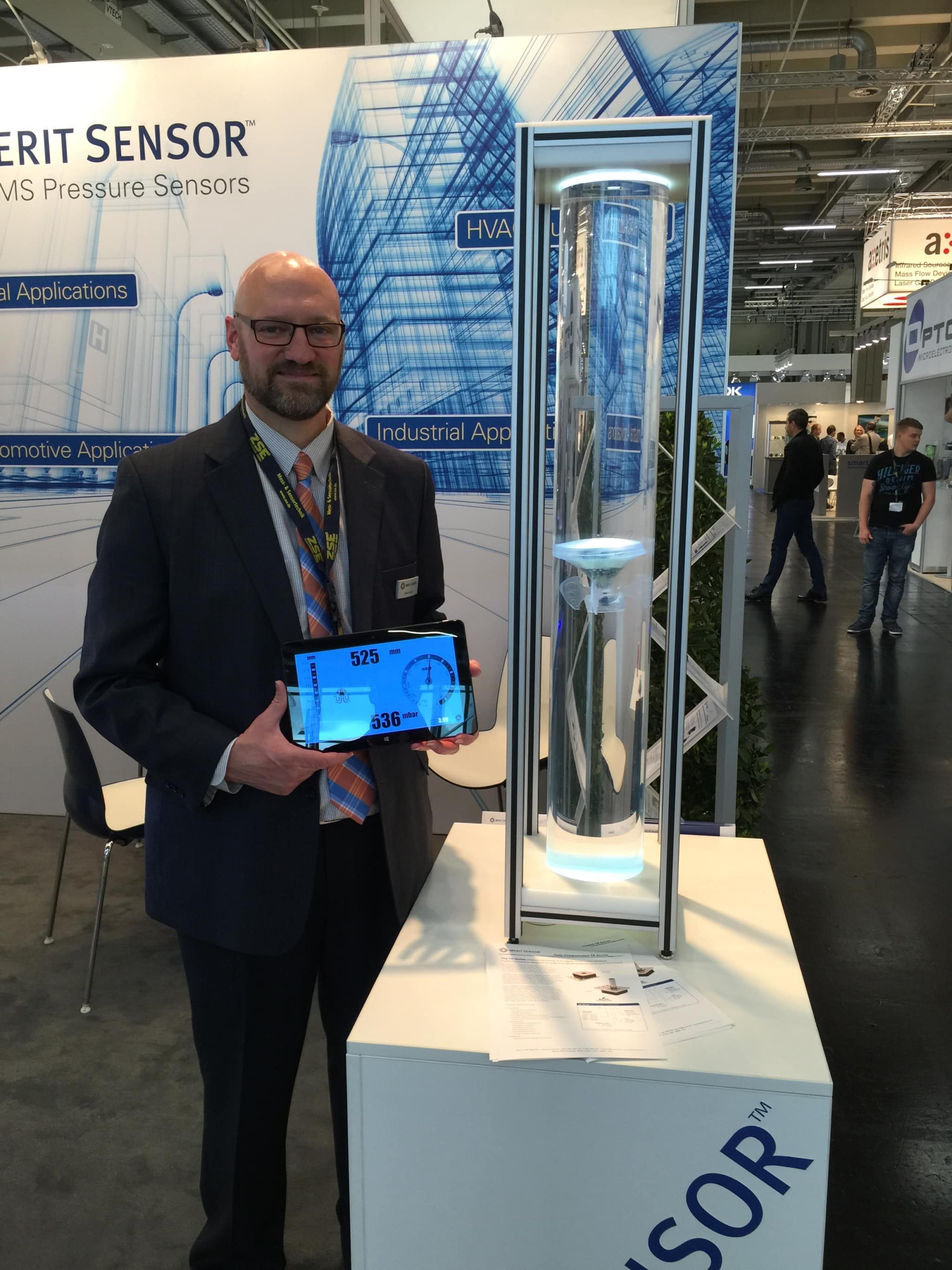
Merit Sensor introduced a new product demonstration for their TR Series MEMS pressure sensor at Sensor+Test in Nürnberg, Germany (May 19-21, 2015) and Sensors Expo in Long Beach California (June 9-11). “Something Fishy” was the brain child of 3 of our very talented engineers, Greg Liddiard, BJ Minson, and Chris Peterson, who designed and built a demonstration that showed the excellent stability and accuracy of the TR Series pressure sensor and its harsh media compatibility.

1-blog-5

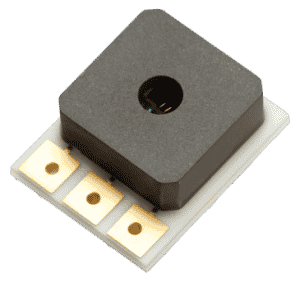
TR Series Pressure Sensor

1-blog-3

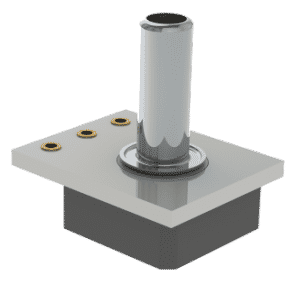
TR Series Pressure Sensor with Ferrule Port


In Q2 of 2014 Rick Russell, President of Merit Sensor, announced an engineering competition for all of the engineers within the Sensors division to come up with a trade show and exhibition demonstration. The winning entry was “Something Fishy” by Greg Liddiard, BJ Minson, and Chris Peterson. Initially the design was a large clear tank that would contain many mechanical fish using pressure sensors to sit at a specific level within the tank. Someone would then stir up the water in the tank and send the mechanical fish off in different directions and at different depths, and as soon as the stirring stopped the fish would go back to their specific levels within the tank. This design posed an issue though as we could only control the height of the fish in the tank but not where they sat on the horizontal axis. As a result the three engineers decided to simplify the design by using just one mechanical fish (aka “Squido”) in a vertical tank. By using the single fish in a vertical tank we were able to show the accuracy and stability better than had we used the large tank with many fish. In addition this also afforded the engineers to connect the Squido via Bluetooth to a tablet and write an app to be able to control Squido in real time with a real time reading of the pressure within the tank.

Photo Jun 11, 11 31 53 AM Photo May 19, 2 47 05 AM